

Ginger Tea Combinations: Benefits of Adding Lemon, Honey, Turmeric & Green Tea
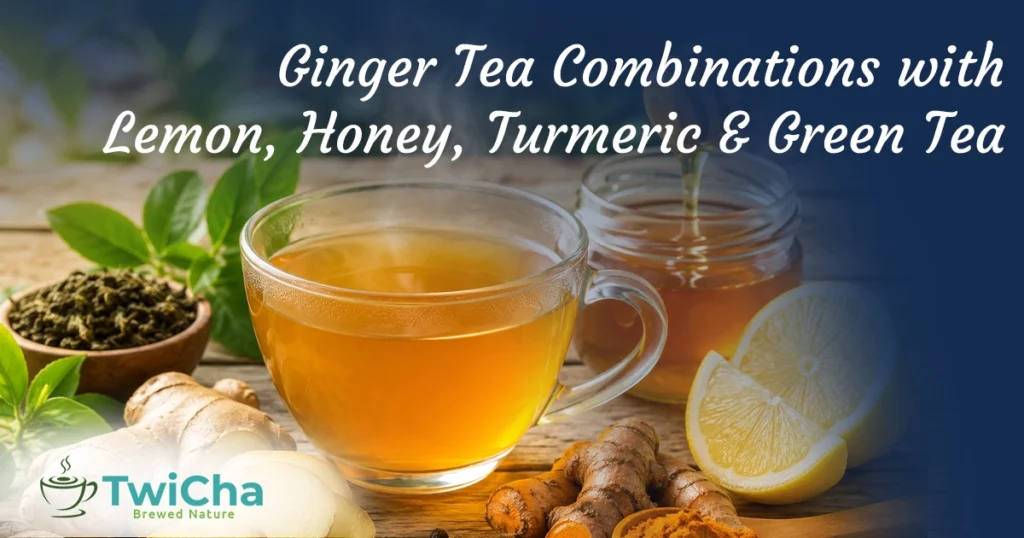
| Quick Answer: Ginger tea is already one of the most beneficial herbal teas available – but combining it with the right ingredients amplifies specific benefits. Lemon adds vitamin C that enhances ginger’s antioxidant action and iron absorption. Honey adds antimicrobial enzymes and prebiotic compounds. Turmeric adds curcumin’s COX-2 anti-inflammatory pathway – complementary to ginger’s own. Green tea adds L-theanine and EGCG for a calm focus and immune coverage dimension that pure ginger tea does not provide. Each combination is not just additive – it is synergistic, meaning the combined effect exceeds what each ingredient provides alone. |
Why Combining Ginger with Other Ingredients Works Better
Ginger tea on its own is a powerful wellness drink – gingerols and shogaols provide anti-inflammatory, digestive, antimicrobial, and antinausea benefits that are among the most clinically documented in herbal medicine. So why add anything to it?
The answer lies in the concept of botanical synergy – where two ingredients working through different but complementary mechanisms produce a combined effect stronger than either alone. This is not marketing language; it is documented pharmacology.
- Lemon + Ginger: Lemon’s vitamin C enhances gingerol’s antioxidant activity AND dramatically increases iron absorption from plant foods consumed alongside the tea – a nutritional synergy with practical daily relevance
- Honey + Ginger: Honey’s hydrogen peroxide-generating system and methylglyoxal provide direct antimicrobial action through a completely different mechanism than ginger’s volatile oils – broader spectrum protection
- Turmeric + Ginger: Both inhibit COX-2 (anti-inflammatory), but through different binding sites. Combined, they address more of the COX-2 protein surface simultaneously. Black pepper (piperine) added to this combination increases curcumin bioavailability by up to 2000%
- Green Tea + Ginger: Green tea’s L-theanine provides calm focus and EGCG provides antioxidant immune cell protection – two dimensions that pure ginger tea simply does not address
This guide covers each combination specifically – what the research says, what unique benefits each pairing creates, and exactly how to make each one.
1. Lemon Ginger Tea Benefits – The Most Popular Combination
Lemon and ginger is the most widely consumed ginger combination globally – and for good reason. WebMD’s medically reviewed guide (updated 2024) lists lemon ginger tea as having research-supported connections to positive effects on the digestive system, immune system, sinus cavity, and cardiovascular health. The combination’s strength lies in the specific ways lemon’s vitamin C and citric acid work with ginger’s gingerols.
Why Lemon + Ginger Is More Than the Sum of Its Parts
- Vitamin C + Gingerol antioxidant synergy – lemon’s vitamin C (30-50mg per medium lemon) is a water-soluble antioxidant that works in aqueous environments (like blood plasma). Gingerol works as a lipid-soluble antioxidant. Together, they provide antioxidant protection in both water-soluble and fat-soluble cellular environments – complementary coverage that neither provides alone
- Vitamin C + Iron absorption – if you consume any plant-based iron (from food or supplements) alongside lemon ginger tea, lemon’s vitamin C dramatically enhances non-haem iron absorption. This is one of the most practically important nutritional synergies in daily diet – particularly for vegetarians, women with heavy periods, and people with iron-related fatigue
- Citric acid + digestion – lemon’s citric acid enhances the production of digestive enzymes that complement ginger’s own gastric enzyme stimulation. As Zenbear Honey Tea’s science blog notes, citric acid promotes healthy gut function by creating an optimal pH environment for digestive activity – the combination creates a more complete digestive support than ginger alone
- Limonene + respiratory support – lemon’s limonene (a terpene compound) has documented anti-inflammatory and expectorant properties. Combined with ginger’s volatile oils and the steam from a hot cup, lemon ginger tea provides multi-mechanism respiratory soothing – particularly effective during colds and congestion
What the Research Says
According to Organic Facts’ evidence-based guide (medically reviewed by Vanessa Voltolina MS, RD, 2024), lemon ginger tea has documented potential to boost immune function, reduce fever, improve cognition, regulate blood sugar, aid digestion, and soothe pain. The Signos (continuous glucose monitoring company) review noted lemon ginger tea’s potential to stabilise glucose levels – combining ginger’s alpha-glucosidase inhibition with lemon’s fibre and flavonoid content.
MedicineNet’s medically reviewed article (2025) lists 13 specific benefits of lemon ginger tea, citing evidence for nausea relief, digestive support, constipation relief, cardiovascular protection, anti-inflammatory pain reduction, skin health, and weight management – each benefit traceable to the specific pharmacological properties of one or both ingredients.
Best Uses for Lemon Ginger Tea
| When to Drink | Why This Timing Works |
| Morning (empty stomach) | Kickstarts digestive enzymes; vitamin C absorption is highest when stomach is empty; lemon’s alkalising effect after overnight acidity |
| During a cold or flu | Triple action: ginger antimicrobial + lemon vitamin C immune support + steam for nasal passages |
| After meals with iron-rich food | Vitamin C dramatically enhances plant iron absorption from food consumed alongside or just before the tea |
| Before bed (caffeine-free) | Lemon ginger has no caffeine – suitable for evening use; ginger’s digestive motility continues overnight; lemon’s limonene provides calming respiratory benefit |
How to Make Lemon Ginger Tea
- Slice a 1-inch piece of fresh ginger and bring to a gentle boil in 300ml water
- Simmer 5-7 minutes, then remove from heat
- Allow to cool slightly to 60-70°C before adding lemon – vitamin C degrades rapidly above 70°C
- Squeeze half a fresh lemon into the strained tea
- Add honey if desired – add after lemon, also below 70°C to preserve honey’s active enzymes
| Critical tip: Never add lemon (or honey) to boiling water. Vitamin C is heat-sensitive – it degrades significantly above 70°C. Wait for the tea to cool slightly after straining before squeezing in lemon. This single step significantly increases the nutritional benefit of every cup. |
2. Ginger Tea with Honey Benefits – The Soothing Combination
Ginger tea with honey is the classic Indian home remedy for sore throats, colds, and digestive discomfort – and modern research has now explained exactly why this combination works as well as traditional medicine always knew it did.
Why Honey + Ginger Creates Something Unique
- Honey’s antimicrobial mechanism – honey produces hydrogen peroxide through the glucose oxidase enzyme system, creating a sustained low-level antimicrobial environment. Its methylglyoxal content provides additional antibacterial action through a completely different pathway than ginger’s volatile oil-based antimicrobial properties – two complementary mechanisms covering different pathogen types
- Honey as a prebiotic – honey’s oligosaccharides feed beneficial gut bacteria (Lactobacillus and Bifidobacterium), supporting microbiome balance. Combined with ginger’s carminative and digestive enzyme-stimulating action, ginger-honey tea provides both mechanical digestive support and microbiome nourishment in one cup
- Honey for sore throat – honey’s viscosity coats the throat mucosa, creating a physical protective barrier that soothes irritation while hydrogen peroxide provides antimicrobial action. The WHO lists honey as a demulcent (mucous membrane soother) in its guidelines for acute respiratory infections. Combined with ginger’s anti-inflammatory action, the sore throat relief is significantly faster than either ingredient alone
- Palatability enhancement – practically important: honey makes ginger tea significantly more pleasant to drink consistently. Ginger’s bitter, spicy sharpness can be offputting at therapeutic doses. Honey masks this without adding the processed sugar that destabilises blood glucose – making daily ginger tea consumption more sustainable as a long-term habit
What the Research Says
Zenbear Honey Tea’s science-based analysis of the ginger-lemon-honey combination notes: “Honey’s enzymatic activity produces hydrogen peroxide – giving it antimicrobial properties that complement ginger’s antimicrobial volatile oils”. The combination is one of the most commonly recommended home treatments for upper respiratory infections across Indian, Chinese, and Arabic traditional medicine systems – all independently arriving at the same combination from their own empirical observations.
A Cochrane review on honey for cough in children found honey more effective than placebo for reducing nighttime cough severity – the soothing and antimicrobial mechanisms are directly applicable to the honey-ginger tea combination in the context of respiratory illness.
Best Uses for Ginger Tea with Honey
| When to Drink | Why This Timing Works |
| During sore throat or cold | Honey coats throat; ginger reduces inflammation; combined antimicrobial action addresses both the symptom and the cause |
| After meals for digestion | Honey’s prebiotic oligosaccharides + ginger’s digestive enzymes – comprehensive post-meal gut support |
| Before bed | Both honey and ginger have mild sedative-adjacent properties; honey provides a small glycogen spike that stabilises overnight blood sugar and prevents early morning waking |
| For children (over 12 months) | Honey should never be given to children under 12 months (botulism risk). For children above 12 months, ginger honey tea is a safe, effective home remedy for cough and cold |
How to Make Ginger Tea with Honey
- Prepare a standard cup of ginger tea – fresh ginger slices simmered in water for 5-7 minutes, strained
- Allow to cool to approximately 60-65°C (warm but not hot enough to burn your mouth)
- Add 1-2 teaspoons of raw, unprocessed honey – raw honey retains more active enzymes than pasteurised honey
- Stir gently and drink warm
| Raw honey vs processed honey:
Raw honey (unheated, unfiltered) retains glucose oxidase enzymes that produce hydrogen peroxide – the primary antimicrobial mechanism. Pasteurised honey (most commercial honey) has these enzymes partially or fully denatured by heat. For maximum antimicrobial benefit, use raw or minimally processed honey. For flavour and sweetness, both work equally well. |
3. Turmeric Ginger Tea Benefits – The Anti-Inflammatory Powerhouse
The turmeric-ginger combination is grounded in one of the most compelling botanical anti-inflammatory synergies in the research literature. Both herbs independently inhibit COX-2 – the enzyme responsible for producing prostaglandins that drive inflammation and pain. Together, with the critical addition of black pepper, this combination creates what many integrative medicine practitioners describe as a natural NSAID-equivalent – though always with the honest context that its potency at tea concentrations is significantly gentler than pharmaceutical NSAIDs.
Why Turmeric + Ginger + Black Pepper Is the Complete Formula
- COX-2 inhibition from two angles – ginger’s 6-gingerol and curcumin from turmeric both inhibit COX-2, but bind to different sites on the enzyme. Research suggests combined COX-2 inhibition is more complete when both compounds are present – covering a broader range of the enzyme’s active surface simultaneously
- LOX pathway coverage – ginger also inhibits 5-LOX (5-lipoxygenase), a second inflammatory enzyme that turmeric’s curcumin does not target as effectively. The ginger-turmeric combination therefore addresses both COX-2 and LOX inflammatory pathways – a dual-pathway anti-inflammatory coverage that single-ingredient teas cannot provide
- Piperine + curcumin synergy (the critical addition) – turmeric’s curcumin has notoriously poor bioavailability when consumed alone (less than 1% absorption). Black pepper’s piperine inhibits the liver enzyme that rapidly metabolises curcumin, increasing its bioavailability by up to 2000%. Adding even a pinch of black pepper to turmeric ginger tea transforms the curcumin from largely unabsorbed to meaningfully bioavailable – one of the most practically significant nutritional synergies in herbal medicine
- Warmth + absorption – both turmeric and ginger are fat-soluble – meaning their key compounds are better absorbed when consumed with a small amount of fat. Adding a drop of coconut oil, ghee, or consuming the tea after a fatty meal significantly improves curcumin and gingerol absorption. This is why traditional golden milk (haldi doodh) uses dairy – fat improves turmeric’s absorption
What the Research Says
A 2021 review in Pharmaceuticals confirmed the complementary anti-inflammatory mechanisms of ginger (6-shogaol) and curcumin – noting that combined administration addressed a broader spectrum of inflammatory markers than either compound alone. The same review highlighted the piperine bioavailability enhancement as the critical factor in making dietary turmeric consumption clinically meaningful rather than decorative.
A 2022 meta-analysis (Journal of Functional Foods) examined turmeric supplementation across 26 RCTs – finding significant reductions in C-reactive protein (CRP) and IL-6 in subjects taking curcumin with enhanced bioavailability formulations (including piperine). Ginger similarly reduces CRP and IL-6 through its own anti-inflammatory mechanisms – the combined effect on these inflammatory markers is additive.
Best Uses for Turmeric Ginger Tea
| When to Drink | Why This Timing Works |
| Morning (with breakfast) | Fat from breakfast improves curcumin and gingerol absorption; anti-inflammatory effect begins early in the day |
| Post-exercise | Both ginger and turmeric reduce exercise-induced inflammation and DOMS (delayed onset muscle soreness) – powerful recovery combination |
| During joint discomfort | Combined COX-2 inhibition provides anti-inflammatory pain support – most consistent benefit with 4-8 weeks of daily use |
| Before bed as golden milk | Traditional ‘haldi doodh’ format – with milk (fat for absorption) + black pepper + honey – sleep and anti-inflammatory recovery overnight |
How to Make Turmeric Ginger Tea
- Combine: 1-inch fresh ginger (sliced) + ½ teaspoon turmeric powder (or 1-inch fresh turmeric) + 300ml water
- Bring to a gentle boil, simmer 7-10 minutes
- Add a pinch of black pepper – non-negotiable for curcumin absorption
- Strain into a cup, add honey to taste
- Optional: add a drop of coconut oil or ghee for fat-soluble absorption enhancement
| The black pepper rule: Always add black pepper to turmeric preparations. Without piperine, most of turmeric’s curcumin passes through the body unabsorbed. This single addition – a pinch of black pepper – makes the difference between decorative turmeric consumption and genuinely bioavailable curcumin intake. Traditional haldi doodh recipes always include black pepper for this reason. |
4. Green Tea with Ginger Benefits – Calm Energy Meets Warming Wellness
Green tea and ginger is a combination that delivers genuinely different benefits from either ingredient alone – creating a drink that is simultaneously energising, calming, anti-inflammatory, and digestively supportive. It is also the combination that aligns most directly with TwiCha GREEN’s formulation philosophy.
Why Green Tea + Ginger Creates a Unique Functional Profile
- L-theanine + Ginger’s thermogenic effect – green tea’s L-theanine produces calm alertness (alpha wave activity) while ginger’s thermogenic compounds increase metabolic rate and body warmth. The result is alert, focused warmth – a combination that is particularly useful in the morning or during cold weather when you want energy without anxiety
- EGCG + Gingerol antioxidant coverage – green tea’s EGCG (water-soluble antioxidant, superoxide scavenging mechanism) and ginger’s gingerols (different antioxidant pathways) together provide broader antioxidant coverage than either alone – similar to the lemon + ginger antioxidant synergy but through different compound types
- Dual digestive and cognitive support – green tea’s L-theanine and caffeine support cognitive function; ginger’s antispasmodic and digestive enzyme-stimulating properties support gut function. Few single herbal teas address both dimensions simultaneously
- Immune triple action – EGCG (direct antimicrobial + antiviral), ginger’s volatile oils (antimicrobial), and L-theanine’s cortisol reduction (improving immune cell activity) – three complementary immune mechanisms in one cup
- Metabolism support – both green tea catechins (mild thermogenic, fat oxidation support) and ginger (thermogenic, gastric motility) independently support metabolic rate. Combined, the thermogenic effect is more consistent and sustained than either alone – particularly relevant for people managing weight alongside a calorie-conscious diet
What the Research Says
Both green tea and ginger have independent, well-documented clinical evidence – covered in detail in the dedicated green tea and ginger blogs. For the combination specifically, the synergy is primarily pharmacological (complementary mechanisms) rather than directly studied in combination RCTs. The most relevant combined evidence comes from studies on multi-ingredient formulations that include both, and from the pharmacological compatibility of their bioactive compounds.
A 2025 meta-analysis (University of Szeged, MDPI) confirmed L-theanine’s dose-dependent cognitive benefits. The ginger-in-green-tea combination is specifically popular in Japanese and Indian wellness traditions – where it has been consumed for centuries as a performance and digestive tea. TwiCha GREEN and TwiCha BLACK by Camomila Botanicals use this combination as their core formulation premise – green or black tea base with ginger (7%) alongside 10 other botanical ingredients.
Best Uses for Green Tea with Ginger
| When to Drink | Why This Timing Works |
| Mid-morning (10 AM-12 PM) | L-theanine calm focus + ginger warmth – ideal for sustained work performance without coffee anxiety |
| Pre-workout | Caffeine for performance + ginger thermogenic for warm-up + anti-inflammatory preparation for reduced DOMS |
| After lunch | Ginger accelerates gastric emptying (reduces post-lunch heaviness) + L-theanine prevents afternoon cognitive dip |
| Cold weather morning | Ginger’s warming thermogenic effect + green tea’s alertness – replaces coffee for those who find coffee too harsh in the morning |
How to Make Green Tea with Ginger
- Prepare fresh ginger infusion: simmer 3-4 slices of ginger in 50ml water for 3-4 minutes
- Separately, brew green tea at 80-85°C (not boiling – boiling water makes green tea bitter and degrades L-theanine) for 2-3 minutes
- Combine the ginger infusion with the green tea
- Add lemon for a triple combination – the lemon enhances both the green tea’s EGCG absorption and the ginger’s antioxidant activity
- No milk – dairy interferes with EGCG absorption
| Green tea temperature is critical:
80-85°C, not boiling. This is the single most common mistake with green tea preparation. Boiling water degrades L-theanine and EGCG while releasing excessive tannins – making the tea bitter and less functional. When combining with ginger, brew the green tea at the correct temperature separately, then combine with the pre-prepared ginger infusion. |
5. Green Tea + Ginger + Lemon – The Triple Combination
This three-ingredient combination brings together the benefits of all previous sections – and creates specific additional benefits from the triple interaction.
| Ingredient | What It Contributes | Unique to Triple Combination |
| Green tea | L-theanine (focus) + caffeine (alertness) + EGCG (immune, antioxidant) | EGCG absorption enhanced by lemon’s vitamin C |
| Ginger | Gingerols (anti-inflammatory) + antispasmodic (digestion) + thermogenic | Gingerol antioxidant activity amplified by vitamin C |
| Lemon | Vitamin C (immune) + citric acid (digestion) + limonene (respiratory) | Vitamin C enhances both EGCG and gingerol antioxidant activity simultaneously |
The specific benefit of the triple combination over double combinations: lemon’s vitamin C simultaneously enhances EGCG absorption from green tea AND amplifies gingerol’s antioxidant properties – creating a compounded antioxidant effect that neither green tea + ginger nor lemon + ginger provides as strongly on its own.
This combination is one of the best-researched natural options for immune support, digestive wellness, and antioxidant protection in a single cup – with each ingredient contributing a distinct and compatible mechanism.
How to Make Green Tea + Ginger + Lemon
- Brew green tea at 80-85°C for 2-3 minutes in a separate vessel – protect the L-theanine and EGCG
- Simmer ginger slices in 50ml water for 3-4 minutes, strain
- Combine ginger infusion with green tea
- Cool to below 70°C before adding lemon – protect vitamin C
- Squeeze half a fresh lemon, add honey if desired
- Optional: pinch of black pepper if adding any turmeric
- No milk – dairy reduces EGCG absorption significantly
Which Ginger Tea Combination Is Right for You?
Use this table to match your primary wellness goal to the most evidence-aligned combination:
| Primary Goal | Best Combination | Why |
| Cold, flu, sore throat | Lemon + Ginger + Honey | Triple antimicrobial + vitamin C immune support + soothing throat coating |
| Anti-inflammatory / joint pain | Turmeric + Ginger + Black Pepper | Dual COX-2 inhibition + LOX pathway + piperine for curcumin bioavailability |
| Morning energy + focus | Green Tea + Ginger (+ Lemon) | L-theanine calm focus + caffeine + thermogenic warmth |
| Digestion + post-meal comfort | Lemon + Ginger (or Honey + Ginger) | Citric acid + gingerol enzyme stimulation or ginger + honey prebiotic |
| Immunity (daily habit) | Green Tea + Ginger + Lemon | EGCG + gingerol + vitamin C – three complementary immune mechanisms |
| Weight management support | Green Tea + Ginger | Combined thermogenic + L-theanine satiety + metabolic support |
| Menstrual pain | Ginger + Honey (+ Turmeric) | Prostaglandin inhibition (ginger) + COX-2 (turmeric) + soothing honey |
| Bedtime / evening ritual (caffeine-free) | Ginger + Honey + Lemon (no tea) | Zero caffeine + soothing + digestive + antimicrobial |
| Ginger Combinations in Ready-Made Botanical Blends
If you prefer a ready-made botanical blend that includes ginger alongside complementary ingredients – Camomila Botanicals’ TwiCha range uses ginger as a core ingredient across multiple blends: TwiCha GREEN – Green tea + ginger (7%) + lemongrass + cardamom + cinnamon + turmeric + black pepper + 6 more botanicals. The green tea + ginger + turmeric + black pepper combination in one cup – with piperine already present for curcumin bioavailability. TwiCha BLACK – Black tea + ginger (7%) + same 11 botanicals. Bolder, higher caffeine. Suitable for those who prefer masala chai character with ginger’s anti-inflammatory benefit. TwiVeda FEMINA – Caffeine-free. Ginger (15%) + turmeric (6%) + chamomile + shatavari. The ginger-turmeric anti-inflammatory combination specifically for menstrual comfort – naturally caffeine-free for evening use. Explore TwiCha Tea Blends – Ginger-Based Botanical Combinations → |
Explore More Wellness Guides
- Ginger Tea Benefits: Complete Guide for Digestion, Nausea, Immunity & Daily Wellness
- Tulsi Tea Benefits: Immunity, Stress Relief & Daily Wellness
- Lemongrass Tea Benefits: Immunity, Digestion & Stress Relief
- Moringa Tea Benefits: Energy, Nutrition & Daily Wellness
- Chamomile Tea Benefits for Sleep, Relaxation & Daily Wellness
- Benefits of Herbal Tea for Daily Wellness: A Complete Guide
Final Thoughts
Ginger tea is already a powerful daily wellness habit. Adding the right companion ingredient – depending on what you need – amplifies specific benefits through documented synergistic mechanisms.
Lemon for immune and antioxidant coverage. Honey for antimicrobial and soothing properties. Turmeric + black pepper for the most evidence-aligned anti-inflammatory combination in the herbal world. Green tea for calm focus alongside ginger’s warmth. Any combination of all four for comprehensive daily wellness support.
The practical approach: start with one combination that addresses your most immediate daily concern. Lemon ginger in the morning if immunity is the priority. Turmeric ginger after exercise if inflammation and recovery matter most. Ginger honey at the first sign of a sore throat. Green tea ginger during work hours for focused, warm alertness.
The beauty of these combinations is that they are made from ingredients you almost certainly already have at home – requiring nothing more than a few minutes of preparation and the consistency to make them a daily habit.
| Disclaimer: This article is for informational purposes only and is not medical advice. These herbal combinations are traditional food and beverage preparations – not treatments for any medical condition. Consult your doctor if you are pregnant, on blood thinners, diabetes medication, or managing a chronic health condition before making significant changes to your daily herbal consumption. |