

Moringa Powder Benefits: A Complete Guide for Skin, Hair, Weight Loss, Energy & Daily Wellness
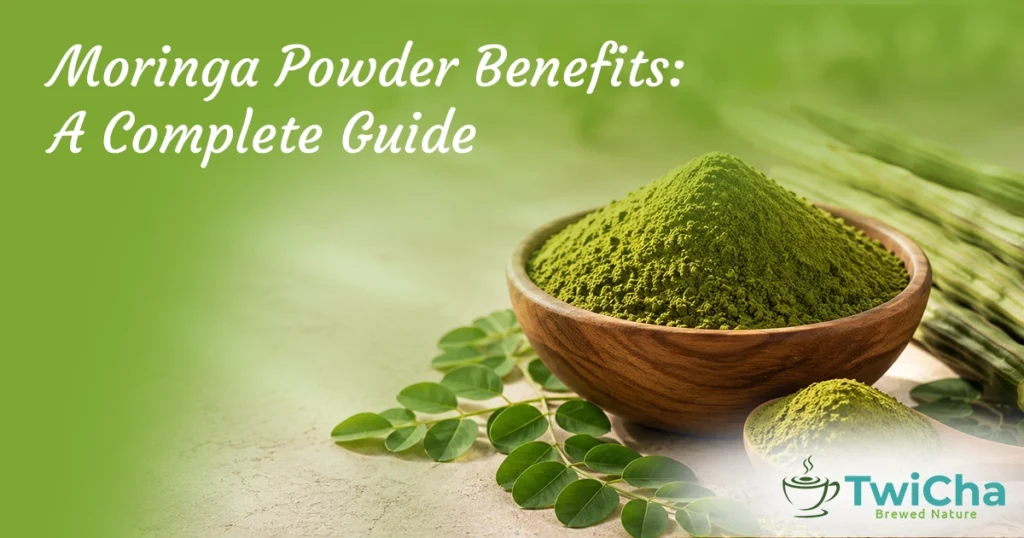
| Quick Answer: Moringa powder is derived from dried Moringa oleifera leaves and is one of the most nutritionally dense plant-based supplements available. It contains iron, vitamin C, vitamin A, vitamin E, calcium, potassium, all 9 essential amino acids, and potent antioxidants including quercetin, chlorogenic acid, and isothiocyanates. Research supports its benefits for energy, skin health, hair wellness, blood sugar regulation, anti-inflammatory support, and gender-specific health needs in both women and men. It is genuinely one of the few plants where the scientific evidence broadly aligns with its traditional reputation. |
What Is Moringa Powder?
Moringa powder is made from the dried and ground leaves of Moringa oleifera – a fast-growing tree native to the Indian subcontinent and widely cultivated across South Asia, Africa, and Southeast Asia. In India, it is commonly called the drumstick tree (sahjan) – a plant whose leaves, pods, seeds, and bark have been used in Ayurvedic medicine and Indian cooking for over 4,000 years.
The powder form concentrates the leaf’s nutritional profile into a convenient, versatile format that can be added to water, smoothies, tea, yoghurt, soups, or any food preparation. It is distinct from moringa tea – which is a brewed infusion – in that it delivers the full spectrum of moringa’s water-soluble and fat-soluble nutrients, fibre, and bioactive compounds in a single serving.
Modern science has validated much of moringa’s traditional reputation. A 2025 comprehensive review in Food Science & Nutrition confirmed moringa’s role as a nutritional powerhouse with documented antioxidant, anti-inflammatory, hepatoprotective, and metabolic wellness effects. Over 1,500 peer-reviewed studies on Moringa oleifera have been published globally – making it one of the most researched functional plants of the past two decades.
Moringa Powder Nutritional Profile – What Makes It a Superfood
The term ‘superfood’ is often overused – but moringa powder’s nutritional density genuinely justifies the label. Here is what 100g of moringa leaf powder contains, according to USDA data and published nutritional analyses:
| Nutrient | Amount per 100g | Daily Value Relevance |
| Protein | 27-29g | One of the richest plant protein sources – contains all 9 essential amino acids |
| Iron | 28-30mg | Approximately 3x the iron of spinach – critical for energy and blood health |
| Calcium | 2,000mg | ~2x the calcium of cow’s milk – supports bone health |
| Vitamin C | 220mg | ~7x the vitamin C of oranges – powerful antioxidant |
| Vitamin A (beta-carotene) | 18,900 IU | ~10x the vitamin A of carrots – crucial for skin and vision |
| Vitamin E (tocopherols) | 113mg | Potent lipid antioxidant – skin cell protection |
| Potassium | 1,324mg | ~3x the potassium of bananas – electrolyte balance |
| Magnesium | 368mg | Muscle, nerve, and energy function support |
| Quercetin | Significant | Antioxidant + anti-inflammatory flavonoid |
| Chlorogenic acid | Significant | Blood sugar moderation, antioxidant |
| Isothiocyanates | Significant | Anti-inflammatory, antimicrobial, cellular protection |
| Important note: Drying moringa leaves into powder preserves most minerals, protein, and fat-soluble vitamins (A, E) well – but reduces vitamin C content by approximately 50-60% compared to fresh leaves (Food Science & Nutrition, 2025). Even after this reduction, moringa powder remains a significant vitamin C source. The minerals, amino acids, and bioactive compounds (quercetin, isothiocyanates) are well-preserved in quality dried powder. |
10 Moringa Powder Benefits – Evidence-Based
1. Powerful Antioxidant and Anti-Inflammatory Support
Chronic inflammation is the underlying mechanism of most modern lifestyle conditions – from joint pain to metabolic disorders to cardiovascular disease. Moringa powder contains three distinct anti-inflammatory compound classes: quercetin (a flavonoid that inhibits inflammatory cytokine production), isothiocyanates (which suppress NF-kB – a key inflammatory signalling molecule), and chlorogenic acid (which reduces oxidative stress at the cellular level).
The research: A 2024 umbrella review of 26 systematic reviews (Frontiers in Pharmacology, 2025) found moringa leaf extracts associated with reduced inflammatory markers including C-reactive protein (CRP) in both clinical and preclinical studies. A 2024 randomised controlled trial tested moringa supplementation in adults with metabolic syndrome over 12 weeks – finding a 34% reduction in CRP levels and a 28% reduction in IL-6 compared to placebo. A landmark 2020 review in Oxidative Medicine and Cellular Longevity analysed 11 clinical and laboratory studies on moringa’s anti-inflammatory properties – finding consistent, significant reduction in TNF-α, IL-6, and CRP across multiple study types.
2. Natural Energy and Fatigue Reduction
Moringa powder’s energy benefit operates through nutritional mechanisms rather than stimulant compounds – making it genuinely different from caffeine or adaptogens. Iron is moringa’s primary energy nutrient: iron is required for haemoglobin production, which carries oxygen in the blood to muscles and organs. Iron deficiency is the most common nutritional deficiency globally – and among the most common causes of unexplained fatigue, particularly in women and vegetarians.
A 2023 study in the Journal of Cellular Nutrition found moringa supplementation improved mitochondrial activity by up to 29% in middle-aged subjects – increasing cellular energy output and reducing oxidative damage. Moringa’s B vitamins support ATP (cellular energy) production, while its complete amino acid profile supports muscle tissue maintenance, which directly impacts physical energy and endurance.
Unlike caffeine, moringa’s energy effect is gradual and cumulative – it does not produce immediate stimulation, but builds over 2-4 weeks of consistent daily use as nutritional deficiencies are replenished.
| Best for:
People with iron-related fatigue, vegetarians and vegans with potential nutritional gaps, women with heavy menstrual cycles causing iron loss, and anyone experiencing persistent low energy despite adequate sleep. |
3. Blood Sugar Regulation – One of Moringa’s Strongest Applications
This is one of moringa powder’s most consistently documented benefits in human clinical trials. Chlorogenic acid and fibre in moringa work together to slow glucose absorption after meals, reducing postprandial blood sugar spikes.
Key studies:
- 2025 RCT (Journal of Ethnopharmacology) – 8g/day moringa leaf powder for 12 weeks in adults with type 2 diabetes: significant reduction in fasting blood glucose (−14.6 mg/dL) and improved lipid profiles vs controls.
- University of North Dakota 2022 trial – moringa leaf supplementation reduced post-meal glucose levels by up to 24% and improved insulin response markers in healthy adults.
- NIH research confirms moringa may lower fasting blood sugar and improve insulin sensitivity in people with elevated glucose.
| Honest context: The blood sugar evidence is strongest for people with elevated glucose or type 2 diabetes. In people with normal blood sugar, the glucose-moderating effect is more modest. People managing diabetes with medication should consult their doctor before using moringa powder, as it may compound blood sugar-lowering effects. |
4. Moringa Powder Benefits for Skin – Vitamins A, C, E + Antioxidants
Moringa powder’s skin benefits come from its exceptional concentration of the three most important skin-health vitamins – A, C, and E – alongside its anti-inflammatory isothiocyanates and antioxidant quercetin. These compounds address skin wellness from multiple angles simultaneously.
- Vitamin A – stimulates cell turnover, reduces acne and breakouts, supports collagen matrix maintenance
- Vitamin C – essential cofactor for collagen synthesis; protects skin cells from UV and pollution-induced oxidative damage; brightens uneven skin tone
- Vitamin E – lipid-soluble antioxidant that protects cell membranes from free radical damage; supports skin moisture retention
- Quercetin and isothiocyanates – reduce systemic inflammation that manifests as acne, redness, and skin sensitivity
The Indian Journal of Dermatology highlights moringa’s documented ability to protect skin from pollution and UV damage – particularly relevant for Indian urban consumers exposed to high particulate matter and prolonged sun exposure.
Moringa powder can be used both internally (consumed daily) and externally (as a face mask mixed with yoghurt, rose water, or honey). Internal consumption addresses the systemic causes of skin issues; external application provides direct antioxidant and anti-inflammatory benefit to the skin surface.
| Skin face mask tip:
Mix 1 teaspoon of moringa powder with 1 teaspoon of plain yoghurt and a few drops of honey. Apply for 15-20 minutes, rinse gently. The combination delivers moringa’s vitamins with yoghurt’s lactic acid and honey’s antimicrobial properties. |
5. Moringa Powder for Hair – Growth, Strength, and Scalp Wellness
Hair wellness depends on adequate nutrition reaching the scalp and follicles. Moringa powder addresses the primary nutritional requirements for healthy hair through its iron, zinc, protein, and vitamin E content – alongside bioactive compounds that support scalp circulation.
- Iron – improves blood circulation to the scalp, strengthening hair follicles and reducing hair shedding related to iron deficiency anaemia
- Zinc – supports the hair growth cycle and reduces dandruff-causing scalp inflammation
- Protein and amino acids – provide the building blocks for keratin, the structural protein of hair shafts
- Vitamin E – antioxidant protection for hair follicle cells; adds natural shine and softness
Key research: A 2024 review in Dermatology and Therapy analysed moringa’s nutrient profile in the context of hair health – concluding that the iron, zinc, and amino acid profile directly addresses the most common nutritional drivers of hair thinning and loss. A 2023 study in the Journal of Cosmetic Dermatology tested moringa seed oil scalp treatment in 45 participants with pattern hair loss over 16 weeks – finding significant reduction in daily hair shedding, increased hair density, and improved scalp circulation vs control.
Moringa powder can be used internally (daily consumption) for systemic nutritional hair support, or externally (as a scalp treatment mixed with oil) for direct follicle nourishment.
| Hair growth mask:
Mix 2 teaspoons of moringa powder with 3 tablespoons of coconut oil. Warm slightly and massage into the scalp. Leave for 30-45 minutes before washing. The combination delivers moringa’s hair nutrients with coconut oil’s fatty acids for scalp conditioning. |
6. Moringa Powder for Weight Loss – What the Evidence Actually Says
This is one of the most searched moringa topics – and one where honest context matters most.
What the evidence supports: Moringa powder’s thermogenic properties and high fibre content support weight management indirectly through several mechanisms:
- High protein content (27-29g/100g) increases satiety – reducing overall calorie intake
- Fibre content slows digestion and reduces post-meal blood sugar spikes – preventing the insulin-driven fat storage that follows glucose spikes
- Chlorogenic acid may activate AMPK (a cellular energy regulation enzyme) – supporting metabolic rate (Metabolism: Clinical and Experimental, 2023)
- Anti-inflammatory isothiocyanates may reduce obesity-associated chronic inflammation
| Honest limitation: Moringa powder alone has not been shown to directly cause significant weight loss in clean clinical trials. Studies showing impressive weight loss results used multi-ingredient supplements where moringa’s individual contribution cannot be isolated. Moringa is best understood as a metabolic support ingredient – useful when combined with a caloric deficit and active lifestyle, not as a standalone fat-burning supplement. |
Practically: Adding 1-2 teaspoons of moringa powder to morning water, a smoothie, or yoghurt as part of a calorie-conscious diet provides real metabolic support – high protein satiety, blood sugar moderation, and nutritional density that reduces cravings. It is a genuine supporting tool for weight management goals, not a magic solution.
7. Cardiovascular Support – Cholesterol and Blood Pressure
A clinical trial found moringa supplementation lowered LDL cholesterol by 11% and total cholesterol by 9% over 8 weeks in people with elevated lipids (Food Science & Nutrition, 2025). The mechanism involves moringa’s beta-sitosterol (a plant sterol that competes with cholesterol absorption in the gut) and its antioxidant protection of blood vessel walls.
Moringa’s potassium content (3x that of bananas) and its nitric-oxide-promoting polyphenols support healthy blood pressure by relaxing blood vessel walls. High blood pressure and elevated LDL cholesterol are two of the most significant cardiovascular risk factors – and both show modest but consistent improvement with regular moringa supplementation in clinical studies.
8. Liver Support and Detoxification
Moringa’s isothiocyanates – particularly glucosinolate-derived compounds – activate the liver’s Phase 2 detoxification enzymes, improving its clearance of environmental toxins, metabolic waste products, and medication residues. A laboratory study identified compounds in moringa that reduced fat buildup in liver cells and increased the activity of fat-breakdown proteins – relevant to non-alcoholic fatty liver disease (NAFLD), a growing concern in India.
For urban Indians exposed to pollution, processed foods, and alcohol, moringa’s hepatoprotective (liver-protecting) properties represent a practically relevant daily benefit.
9. Immune Support – The Antimicrobial and Antioxidant Combination
Studies published in the Journal of Food Science and Technology confirm moringa’s antimicrobial and antifungal properties – making it a natural immunity-supporting addition to the diet. Moringa’s vitamin C (7x that of oranges) directly supports white blood cell production and function. Its beta-carotene supports mucosal immunity – the first line of defense against inhaled and ingested pathogens.
The quercetin in moringa has documented antiviral properties, and moringa’s zinc content supports the rapid proliferation of immune cells during an active infection response.
10. Digestive Wellness and Gut Health
Moringa’s fibre content promotes smooth bowel movement and supports gut microbiome balance. Its anti-inflammatory isothiocyanates reduce gastric ulcer formation and intestinal inflammation. Moringa has traditional use in Ayurvedic medicine specifically for digestive complaints – a use now partially validated by its documented effects on gut motility and gastric acid regulation.
Also Read: Moringa Tea Benefits: Energy, Nutrition and Daily Wellness (Complete Guide)
Moringa Powder Benefits for Females – Women-Specific Applications
Women have specific nutritional needs at different life phases – iron during menstruation, folate during pregnancy, calcium during perimenopause. Moringa powder addresses several of these gender-specific needs with particular relevance.
Iron and Anaemia Support
Iron deficiency is the most common nutritional deficiency in Indian women – affecting an estimated 50% of women of reproductive age according to ICMR data. Moringa contains approximately 28-30mg of iron per 100g – nearly three times the iron content of spinach. For women with heavy periods, vegetarian women, or women with diagnosed iron deficiency anaemia, daily moringa powder consumption provides a meaningful dietary iron contribution.
Important note: Moringa contains non-haem iron (plant-based), which is less bioavailable than haem iron from meat. Consuming moringa with vitamin C (lemon juice, amla, or fruits) significantly increases absorption – moringa’s own vitamin C content partially addresses this, making it self-enhancing in this regard.
Pregnancy and Lactation
Moringa has documented benefits during both pregnancy and breastfeeding, though with important caveats. A 2025 systematic review (MDPI, Food journal) following PRISMA guidelines evaluated eight RCTs on moringa supplementation in postpartum mothers. Results: moringa supplementation increased serum prolactin levels by a mean of 231.72 ng/mL compared to controls, and increased breastmilk volume by up to 400 mL per day. The LactMed database (NCBI) considers moringa leaf safe for breastfeeding mothers.
During pregnancy, moringa provides folate, calcium, and iron – three nutrients critically required for foetal development. However, pregnant women should consult their gynaecologist before consuming moringa powder, as high doses may have uterine-stimulating properties.
Skin and Hair During Hormonal Changes
Hormonal fluctuations during PMS, pregnancy, and perimenopause often manifest as skin breakouts, hair thinning, and fatigue. Moringa’s anti-inflammatory vitamin A, E, and quercetin profile addresses the skin-inflammation dimension, while its iron and zinc support hair follicle health during nutritionally demanding phases.
Menopausal Bone Support
Moringa contains approximately 2,000mg of calcium per 100g – twice the calcium of cow’s milk. Post-menopausal women face accelerated bone density loss due to declining oestrogen. Moringa powder’s calcium, magnesium, and phosphorus content provides meaningful bone mineral support as a dietary supplement alongside adequate vitamin D.
| Summary – Moringa powder benefits for females: iron for menstrual health and anaemia, lactation support (breastmilk volume and prolactin), skin and hair support during hormonal changes, and calcium for menopausal bone health. These are the most evidence-supported gender-specific applications. |
Moringa Powder Benefits for Males – Men-Specific Applications
Moringa offers several documented benefits specifically relevant to men’s health – from testosterone and muscle recovery to prostate wellness and cardiovascular protection.
Testosterone and Muscle Recovery
The most specific study: A four-week RCT (Juan et al., 2021) found that moringa leaf powder protein supplementation significantly increased resting testosterone and anabolic status in men with hyperlipidemia (elevated blood fats) who had normal baseline testosterone levels and were engaged in weight training. The proposed mechanism involves moringa’s beta-sitosterol and isothiocyanates modulating endocrine function and enhancing testosterone synthesis.
A 2024 study of 44 young men found 30 days of moringa leaf powder supplementation improved push-up and treadmill performance while boosting blood antioxidant status (Dong et al., 2024). Moringa’s complete amino acid profile directly supports muscle protein synthesis and recovery after exercise – making it a natural, food-based alternative to synthetic protein supplements for muscle maintenance and growth.
Prostate Wellness
Moringa seeds and leaves contain glucosinolates – sulfur-containing compounds that may help prevent benign prostatic hyperplasia (BPH) and have demonstrated anticancer properties in test-tube studies on prostate cancer cells. A 2022 rat study found moringa leaf extract improved prostate appearance, reduced cell growth, and had anti-inflammatory effects without harming the liver or kidneys.
Human clinical data for moringa and prostate health is still limited – most evidence comes from laboratory and animal studies. However, the anti-inflammatory and glucosinolate-based mechanism is biologically plausible and consistent with what is known about plant compounds and prostate health.
Cardiovascular Protection
Men are at higher risk of cardiovascular disease than women, particularly before the age of 70. Moringa’s LDL-lowering effect (11% reduction in 8 weeks), blood pressure-supporting potassium content, and anti-inflammatory isothiocyanates directly address three of the most modifiable cardiovascular risk factors.
Energy and Physical Performance
Beyond its testosterone-supporting evidence, moringa’s iron-rich profile supports oxygen delivery to muscles – directly improving aerobic performance and reducing exercise-induced fatigue. For men who train regularly, moringa powder’s combination of complete amino acids, iron, magnesium, and zinc supports both performance and recovery.
| Important caveat for men: Some animal studies found moringa decreased testosterone levels in treated rats. Human studies show the opposite direction, but the animal data introduces uncertainty. Men with existing hormonal concerns or low testosterone should discuss moringa supplementation with their doctor before regular use. |
Moringa Powder Uses – How to Add It to Your Daily Routine
Moringa powder is versatile – it can be incorporated into virtually any meal or beverage without significantly altering taste when used at recommended amounts:
| Method | How to Use | Best For |
| Morning water | 1 tsp moringa powder stirred into a glass of warm water with lemon | Quickest daily habit; lemon enhances iron absorption |
| Smoothie | 1-2 tsp added to any fruit or vegetable smoothie | Masks earthy taste; pairs well with mango, banana, pineapple |
| Yoghurt or curd | 1 tsp stirred into plain curd with honey | Easy breakfast addition; probiotics complement moringa’s gut benefits |
| Soup or dal | 1 tsp added just before serving (not during cooking) | Heat destroys some vitamin C; add at end to preserve nutrients |
| Moringa tea | Steep 1 tsp in hot water (not boiling) for 3-5 minutes | Traditional use; lighter than powder directly – see moringa tea blog |
| Rice or rotis | 1 tsp added to flour or rice water | Traditional South Indian use – drumstick leaves in food |
| Face mask | 1 tsp + yoghurt + honey, apply for 15 min | Topical skin benefit – vitamins A, E, antioxidants |
| Hair mask | 2 tsp + coconut oil, massage into scalp | Direct follicle nourishment; leave 30-45 min |
| Recommended daily dose:
1-2 teaspoons (approximately 3-6g) daily is the standard recommendation for most healthy adults. Clinical studies showing significant benefits have used doses from 3g to 8g daily. Start with 1 teaspoon and increase gradually to assess tolerance. More is not necessarily better – moringa’s benefits are nutritional and cumulative, not dose-dependent in a linear way. |
Moringa Powder vs Moringa Tea – Which Is Better?
Both forms deliver moringa’s benefits – but differently. Here is a clear comparison:
| Factor | Moringa Powder | Moringa Tea |
| Nutrient delivery | Full spectrum – including fibre, fat-soluble vitamins, all bioactives | Primarily water-soluble compounds – vitamin C, antioxidants, some minerals |
| Bioavailability | Higher for fat-soluble nutrients (A, E) when consumed with food | Higher for water-soluble antioxidants (extracted fully into hot water) |
| Flavour | Earthy, slightly grassy – can be masked in smoothies/food | Lighter, more pleasant – suitable as a standalone hot drink |
| Convenience | Requires mixing – less convenient than steeping | Simple steeping – easiest daily format |
| Iron content | Higher – fibre and full leaf content present | Lower – minerals partially extracted, not all transferred to liquid |
| Daily habit | Added to meals/drinks – flexible timing | Best as a dedicated daily ritual – morning or post-meal |
| Best for | Nutritional gaps, energy, hair, iron support | Daily antioxidant, energy, gentle wellness – see our moringa tea guide |
| Moringa in a Daily Tea Blend – TwiCha NOURISH
If you prefer the convenience of a ready-made botanical tea that includes moringa, TwiCha NOURISH by Camomila Botanicals combines green tea (80%), moringa (15%), and spearmint (5%) in a clearly labelled loose-leaf blend. The moringa content provides its nutritional energy and antioxidant benefits within the context of green tea’s L-theanine and gentle caffeine – a practical daily morning ritual that delivers moringa alongside complementary botanicals. |
Moringa Powder Side Effects – The Honest Guide
Moringa powder is generally safe and well-tolerated at recommended doses. However, there are specific situations and potential effects worth knowing:
Common Side Effects at High Doses
- Digestive discomfort – nausea, loose stools, or stomach cramps when starting moringa or consuming large amounts. Start with 1 teaspoon and increase gradually. Most people adapt within 1-2 weeks
- Earthy taste – moringa has a distinctive taste that some people find unpleasant in water. Masking in smoothies, yoghurt, or food preparation resolves this for most people
Important Safety Considerations
- Pregnancy – high doses of moringa may have uterine-stimulating properties. Pregnant women should consult their doctor before use. Small amounts in food preparation are generally considered safe; supplemental doses warrant medical advice
- Diabetes medication – moringa’s blood-sugar-lowering effect may compound the effect of diabetes medications (metformin, insulin). People on diabetes medication should monitor blood glucose and consult their doctor before regular moringa supplementation
- Blood pressure medication – moringa’s blood-pressure-lowering effect may interact with antihypertensive drugs. Check with your doctor if you are on medication for hypertension
- Thyroid conditions – moringa may affect thyroid hormone metabolism at high doses. People on thyroid medication should seek medical advice before regular supplementation
- Men with low testosterone – as noted in the men’s section, some animal studies found testosterone-reducing effects. Men with diagnosed low testosterone should discuss moringa with their doctor
- Heavy metal contamination risk – moringa grown in contaminated soil can accumulate heavy metals. Always purchase moringa powder from reputable sources with third-party testing. FSSAI licensed Indian products provide a basic safety assurance
| General safety rule: At 1-2 teaspoons (3-6g) daily, moringa powder is safe for most healthy adults with no chronic conditions or medications. The documented adverse effects are primarily relevant at high supplemental doses (8g+/day) or in specific medical situations. If in doubt, consult a doctor or qualified nutritionist. |
How to Choose Quality Moringa Powder
Not all moringa powder is equal – quality varies significantly based on growing conditions, processing method, and storage:
- Colour – quality moringa powder should be vibrant deep green. Dull, brown, or olive-grey colour indicates oxidation, excessive heat during drying, or old stock
- Smell – fresh moringa powder has a distinctly earthy, slightly grassy aroma. No smell or a rancid smell indicates poor quality
- Source transparency – look for products that specify the source region. Indian-grown moringa (Rajasthan, Tamil Nadu, Andhra Pradesh) generally has well-established quality standards
- Processing method – shade-dried or low-temperature dried moringa retains more nutrients than high-heat processed powder
- Certifications – FSSAI licensing (India), organic certification, and third-party lab testing for heavy metals are key quality signals
- No fillers or additives – 100% pure moringa leaf powder. Some commercial products mix moringa with fillers, maltodextrin, or other powders
Research Summary – Key Evidence at a Glance
| Benefit | Key Study | Finding | Evidence Quality |
| Anti-inflammatory | Frontiers in Pharmacology, 2025 (26 systematic reviews) | Reduced CRP and IL-6 in clinical and preclinical studies | Strong – umbrella review |
| Blood sugar | Journal of Ethnopharmacology, 2025 RCT | −14.6 mg/dL fasting glucose in T2D over 12 weeks | Strong – RCT |
| Energy/mitochondria | J. Cellular Nutrition, 2023 | 29% improvement in mitochondrial activity in middle-aged adults | Moderate – small study |
| Cholesterol | Food Science & Nutrition, 2025 | 11% LDL reduction, 9% total cholesterol reduction over 8 weeks | Moderate – clinical trial |
| Lactation (females) | MDPI Food 2025 systematic review (8 RCTs) | Prolactin +231.72 ng/mL; breastmilk volume +up to 400 mL/day | Strong – systematic review |
| Testosterone (males) | Juan et al. 2021 RCT | Increased resting testosterone and anabolic status in 4 weeks | Moderate – specific population |
| Physical performance | Dong et al. 2024 (44 men, 30 days) | Improved push-up and treadmill performance; higher blood antioxidants | Moderate – small RCT |
| Hair (topical) | J. Cosmetic Dermatology, 2023 (45 participants) | Reduced shedding, increased density over 16 weeks with moringa oil | Moderate – topical oil, not powder |
| Liver protection | Lab study (NAFLD context) | Reduced fat buildup in liver cells; increased fat-breakdown proteins | Preliminary – lab study only |
Explore More Wellness Guides
- Moringa Tea Benefits: Energy, Nutrition & Daily Wellness (Complete Guide)
- Tulsi Tea Benefits: Immunity, Stress Relief & Daily Wellness
- Lemongrass Tea Benefits: Immunity, Digestion & Stress Relief
- Chamomile Tea Benefits for Sleep, Relaxation & Daily Wellness
- Benefits of Herbal Tea for Daily Wellness: A Complete Guide
- TwiCha NOURISH – Moringa Green Tea with Spearmint
Final Thoughts
Moringa powder is one of the genuinely well-supported botanical supplements – not a trend, not an exaggerated claim, but a nutritionally dense plant food with a growing body of clinical evidence for specific, meaningful health benefits.
Its strongest documented applications are: iron and energy support (especially for women and vegetarians), blood sugar moderation (particularly for those with elevated glucose), anti-inflammatory support, and gender-specific benefits for lactating mothers and physically active men.
Its marketed applications as a weight loss miracle or a standalone cure for complex conditions are overstated. Moringa works best as a consistent daily nutritional habit – one that builds over weeks, fills specific gaps, and supports the body’s natural processes rather than overriding them.
Start with one teaspoon in warm lemon water each morning. Sustain for four weeks. Assess the change. That is the honest path to moringa powder’s documented benefits.
| Disclaimer: This article is for informational purposes only and is not intended as medical advice. Moringa powder is a food supplement, not a medicine. Consult your doctor before using moringa if you are pregnant, on medication, or managing a chronic health condition. |