

Spearmint Tea Benefits: A Complete Guide to Hormonal Balance, Digestion, Memory & Daily Wellness
| Quick Answer: Spearmint tea’s benefits come from two primary compounds – carvone and rosmarinic acid. Carvone provides antispasmodic digestive relief and mild anti-androgenic effects. Rosmarinic acid is a potent antioxidant with emerging evidence for cognitive and memory support. Together, they make spearmint one of the most multi-functional herbs available as a daily tea – with the most clinically documented benefit being hormonal balance in women with elevated androgens (PCOS). |
What Is Spearmint Tea?
Spearmint tea is a herbal infusion made from the leaves of Mentha spicata – a mint species distinct from peppermint (Mentha piperita). While peppermint is characterised by high menthol content and an intense cooling sensation, spearmint contains primarily carvone – a gentler compound that provides mild cooling without the intensity of peppermint.
This distinction matters for both flavour and health applications. Spearmint is significantly milder than peppermint – making it appropriate for people with acid reflux or oesophageal sensitivity, where peppermint can worsen symptoms. It also has a different bioactive profile: spearmint’s carvone, rosmarinic acid, and flavonoids produce health effects that peppermint’s high-menthol composition does not.
Spearmint has been used in traditional medicine across Indian, Arabic, and European systems for digestive complaints, respiratory support, and – more recently – hormonal wellness in women. This guide covers what the modern research says about each of those applications honestly.
The Active Compounds in Spearmint Tea
Before exploring specific benefits, it helps to understand what makes spearmint biologically active:
| Compound | What It Does | Primary Benefit |
| Carvone | Antispasmodic on smooth muscle; acts as calcium-channel-like inhibitor; mild anti-androgenic (5-alpha reductase inhibition) | Digestive relief, hormonal balance support |
| Rosmarinic acid | Potent polyphenol antioxidant; neuroprotective; reduces oxidative stress in brain tissue; anti-inflammatory | Cognitive support, antioxidant protection |
| Limonene | Antifungal, antibacterial, anti-inflammatory; aromatic compound | Antimicrobial, respiratory support |
| 1,8-Cineole | Expectorant, anti-inflammatory in respiratory tract; antimicrobial | Respiratory comfort |
| Flavonoids | Antioxidant; anti-inflammatory; supports cardiovascular and immune function | Broad antioxidant and immune support |
| Spearmint vs peppermint – the key difference: peppermint is high in menthol (up to 40-55%); spearmint is high in carvone (up to 70-80%). Menthol produces intense cooling and can relax the lower oesophageal sphincter (worsening reflux). Carvone produces mild cooling and does NOT relax the oesophageal sphincter – making spearmint significantly safer for people with acid sensitivity or reflux. |
Spearmint Tea Benefits – The Research-Backed Evidence
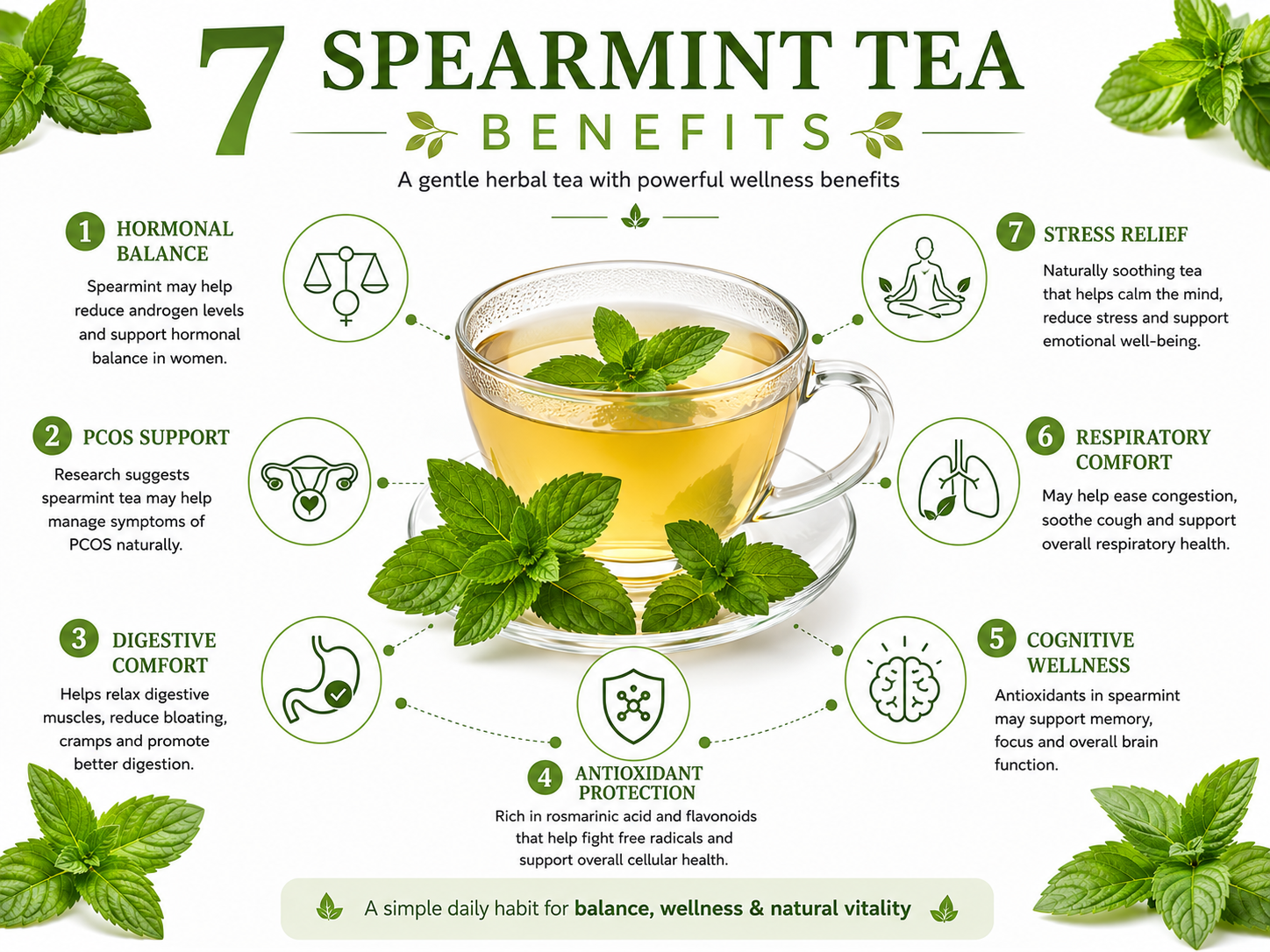
1. Hormonal Balance – The Most Clinically Documented Benefit
This is spearmint tea’s most researched and most discussed health application – and the evidence is genuinely promising, though it comes with important context.
The mechanism: Spearmint contains compounds that inhibit 5-alpha reductase – the enzyme that converts testosterone into dihydrotestosterone (DHT), its more potent form. By reducing DHT production, spearmint reduces total androgen activity. This is the same enzyme targeted by finasteride, a pharmaceutical anti-androgen.
The clinical evidence:
- Grant et al. 2010 (Phytotherapy Research) – 42 women with PCOS, randomised controlled trial, twice-daily spearmint tea for 30 days. Results: significant reduction in free testosterone; increase in LH and FSH (hormones that regulate the menstrual cycle). This is the landmark trial cited across the literature.
- Najafi et al. 2024 (Journal of the Academy of Nutrition and Dietetics) – 150 participants (75 PCOS, 75 non-PCOS), 12-week RCT. Testosterone declined by approximately 15% in the PCOS group; DHEA and androstenedione also decreased significantly. Larger and longer than the 2010 trial – consistent results.
- A meta-analysis of herbal teas in PCOS found spearmint tea, alongside green tea and marjoram, significantly increased FSH levels and had anti-androgenic effects – with larger and longer trials recommended for firmer conclusions.
| What the evidence supports: Spearmint tea produces a real but modest reduction in androgen levels in women with PCOS who drink it twice daily for 30-90 days. The effect is meaningful – but it is not equivalent to pharmaceutical anti-androgens like spironolactone or finasteride. It is a supportive botanical habit, not a replacement for medical PCOS management. |
| Honest context:
The two clinical trials that showed testosterone reduction used 2 cups of spearmint tea daily for 30 days (Grant 2010) and 12 weeks (Najafi 2024). No large-scale, long-term study has tracked effects beyond 12 weeks. Visible improvements in androgen-driven symptoms like hirsutism take longer – hair follicles cycle slowly. Most specialists suggest 3-6 months of consistent use for visible changes. |
2. Digestive Comfort and IBS Relief
Spearmint’s digestive benefits are among its most consistently documented applications – supported by both traditional use across cultures and modern pharmacological evidence.
The mechanism: Carvone – spearmint’s primary bioactive compound – acts as a smooth muscle antispasmodic. It strongly inhibits muscle contractions in the gastrointestinal tract by acting similarly to calcium-channel blockers. When gut smooth muscle relaxes, cramping, bloating, and gas reduce.
The clinical evidence:
- An 8-week randomised study in 32 people with IBS gave one group a supplement containing spearmint, lemon balm, and coriander. The spearmint group reported significantly less abdominal pain, discomfort, and bloating compared to the placebo group.
- A 2021 review in the Journal of Traditional and Complementary Medicine examined carvone’s specific role in flatulence and digestive discomfort – finding direct evidence for its antispasmodic mechanism.
- Traditional Arabic Palestinian Herbal Medicine (TAPHM), Indian Ayurvedic medicine, and European traditional systems all documented spearmint for digestive complaints for centuries – now validated by pharmacological studies confirming the carvone antispasmodic mechanism.
Practically, spearmint tea is effective for: post-meal bloating, gas and cramping, mild nausea, and gut discomfort associated with IBS-type symptoms. It is one of the few herbal teas with documented gastrointestinal benefit that is also safe for people with acid reflux – unlike peppermint, which can worsen reflux.
| Spearmint in Daily Green Tea Blends
Spearmint’s digestive benefit is one reason it appears as a supporting ingredient in botanical tea blends. TwiCha NOURISH by Camomila Botanicals includes spearmint (5%) alongside moringa and green tea – specifically for its post-morning refreshing character and gentle digestive comfort. If you already drink a morning green tea blend and want spearmint’s digestive benefit built into your routine, blends like NOURISH offer a convenient daily format. |
3. Memory and Cognitive Support – Emerging Evidence
This is one of spearmint’s more surprising and exciting areas of emerging research – built on its rosmarinic acid content.
The mechanism: Rosmarinic acid – a polyphenol antioxidant found in spearmint – demonstrates neuroprotective properties in cell studies by reducing oxidative stress in brain tissue and protecting mitochondria. Mitochondria in neurons are particularly vulnerable to oxidative damage – one of the hallmarks of age-related cognitive decline.
The clinical evidence:
- A 90-day double-blind, placebo-controlled trial (N=90; 67% female; mean age 59.4 years) tested spearmint extract supplementation in adults with age-associated memory impairment. Results: quality of working memory improved by 15% (p=0.0469) and spatial working memory accuracy improved by 9% (p=0.0456) vs placebo at 900 mg/day.
- A ScienceDirect-published study (SAMP8 mouse model) found that spearmint extract containing 5% rosmarinic acid improved memory acquisition and retention in learning exercises and reduced markers of oxidative stress in brain tissue – described as the first study showing prevention of cognitive decline following spearmint extract in a model of accelerated ageing.
- A PMC review noted that in human clinical trials, spearmint extract intake resulted in improvements in attention span, concentration span, language comprehension abilities, and working memory in healthy elderly patients.
| Important context:
The cognitive studies used concentrated spearmint extract at 900 mg/day – significantly more rosmarinic acid than a standard cup of spearmint tea would provide. The benefit direction is consistent and promising, but it is not yet confirmed at standard tea-consumption doses. Spearmint tea’s cognitive benefit is plausible, but the evidence is not as strong as the hormonal or digestive evidence. It should be understood as an emerging benefit rather than a confirmed clinical outcome of tea drinking. |
4. Antioxidant Protection
Spearmint is a significant source of rosmarinic acid – a polyphenol with potent antioxidant activity that is also found in rosemary (hence the name). Antioxidants neutralise free radicals – unstable molecules that damage cells and contribute to aging and disease over time.
Spearmint also contains carvone, limonene, flavonoids, and 1,8-cineole – multiple antioxidant compounds working through different pathways. Regular spearmint tea consumption provides consistent antioxidant support that builds over weeks of daily use – contributing to broader cellular protection.
5. Respiratory Comfort
Spearmint has traditional use for respiratory complaints – coughs, congestion, and sore throats – across Indian, Arabic, and European herbal systems. The volatile compounds carvone and 1,8-cineole create a cooling sensation in the airways that soothes irritated mucous membranes.
1,8-Cineole has documented expectorant (mucus-clearing) and mild anti-inflammatory properties in respiratory tissue. The Journal of Alternative and Complementary Medicine documented aromatic use of spearmint for respiratory relief. In Indian households, spearmint tea during seasonal congestion or mild respiratory discomfort is a traditional remedy with pharmacological backing for its mechanism.
6. Stress Relief and Mild Sedative Effect
Spearmint has mild nervine (nerve-calming) properties through its flavonoid content. While this effect is significantly milder than dedicated calming herbs like chamomile, it contributes to spearmint tea’s overall character as a calming, cooling beverage – appropriate for moments of mild stress or tension.
The cooling, refreshing flavour of spearmint also has a documented aromatherapy effect: the scent of carvone and limonene activates a mild parasympathetic (rest) response – meaning the sensory experience of drinking spearmint tea itself has calming physiological value beyond just its bioactive compounds.
7. Blood Sugar Support – Preliminary Evidence
Some studies have examined spearmint’s potential blood sugar effects. An animal study found that spearmint extract produced approximately a 25% reduction in blood sugar over three weeks. Some sources suggest spearmint may support insulin sensitivity indirectly through its androgen-reducing mechanism – since excess androgens worsen insulin resistance in PCOS.
However, the blood sugar evidence for spearmint specifically is preliminary and mostly from animal studies. People managing blood sugar medically should not rely on spearmint tea for this purpose. The indirect mechanism through androgen reduction is more plausible than a direct blood glucose effect.
Spearmint Tea vs Peppermint Tea vs Tulsi Tea – Key Differences
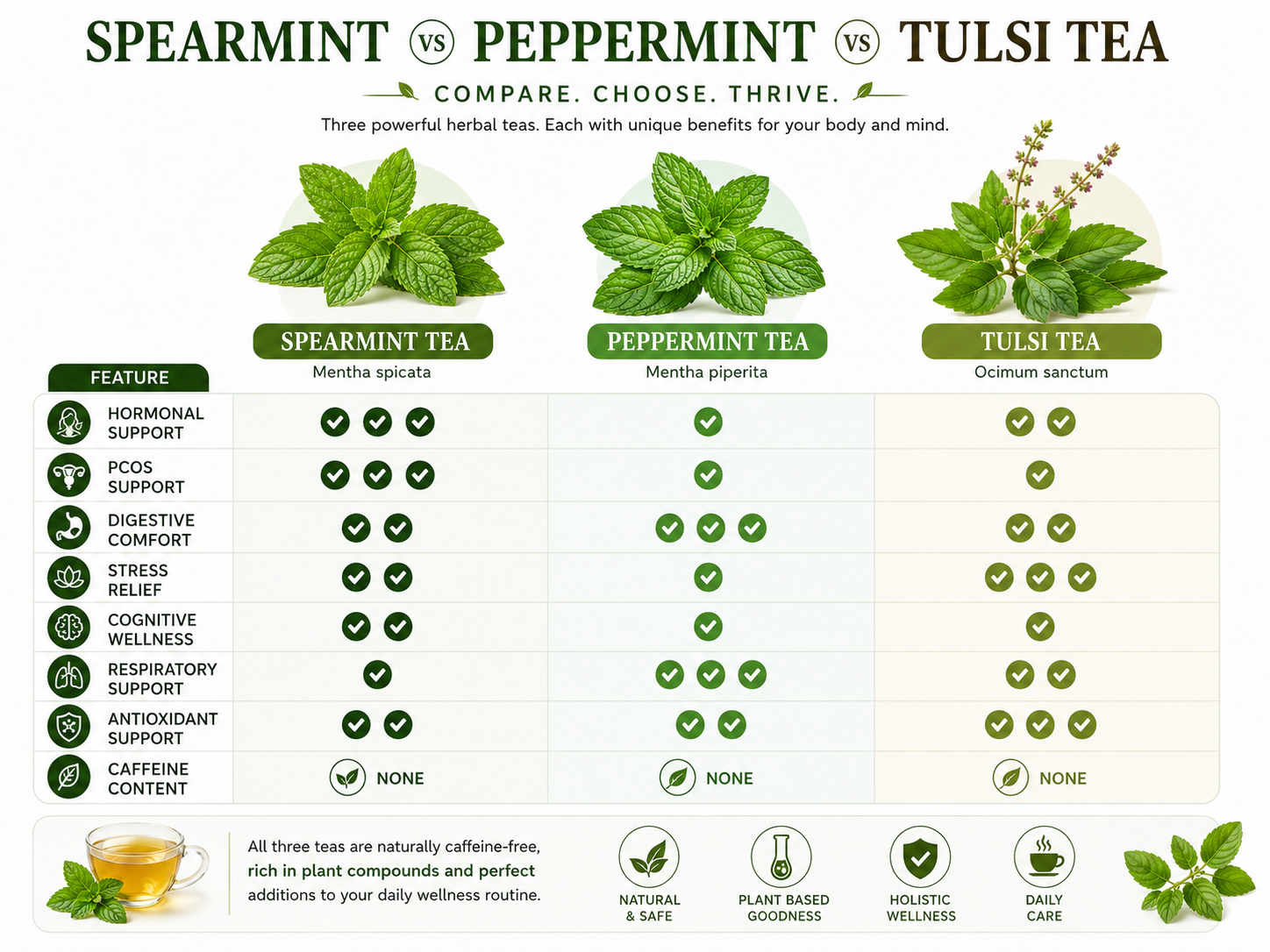
| Factor | Spearmint Tea | Peppermint Tea | Tulsi (Holy Basil) Tea |
| Primary compound | Carvone (gentle cooling) | Menthol (intense cooling, 40-55%) | Eugenol, rosmarinic acid |
| Hormonal effect | Anti-androgenic (clinical evidence) | None documented | Adaptogenic – stress hormone regulation |
| Digestive effect | Antispasmodic – bloating, cramping, IBS | Antispasmodic – stronger but risky for reflux | Mild digestive, antimicrobial |
| Acid reflux safety | Safe – does NOT relax oesophageal sphincter | Risky – can worsen reflux | Safe |
| Cognitive support | Rosmarinic acid – emerging evidence | Menthol – aromatic alertness only | Adaptogenic stress support |
| Flavour intensity | Mild, refreshing, naturally sweet | Intense, very strong cooling | Earthy, herbal, clove-like |
| Best for | Hormonal wellness, digestive comfort, everyday refreshing tea | Stronger digestive relief, headache relief | Stress, immunity, adaptogenic support |
| Caffeine | None | None | None |
How to Brew Spearmint Tea for Maximum Benefit
Standard Method:
- Use water at 85-95°C – not fully boiling. Boiling water can degrade carvone’s volatile compounds and make the tea slightly bitter
- Add 1-2 teaspoons of fresh or dried spearmint leaves to your cup (approximately 2-3g)
- Cover the cup while steeping – this retains the volatile aromatic compounds that are responsible for both flavour and health benefits
- Steep for 3-5 minutes – 3 minutes for a lighter cup; 5 minutes for more robust flavour and more complete carvone extraction
- Strain and enjoy warm – or cool for iced spearmint tea
Optional Additions:
- Honey – complements spearmint’s mild sweetness; adds mild prebiotic benefit
- Lemon – brightens the flavour with citrus acidity; adds vitamin C
- Ginger – amplifies the digestive antispasmodic effect; warming character
| For hormonal benefits specifically: the clinical studies that showed testosterone reduction used 2 cups of spearmint tea per day consistently over 30-90 days. Single-cup or occasional use produces minimal hormonal effect. Consistency is the key variable – the anti-androgenic effect builds with regular daily consumption. |
Best Time to Drink Spearmint Tea
| Time | Why It Works | Best For |
| Morning (with or after breakfast) | Refreshing start to day; carvone’s digestive activation helps prepare the gut for the day’s food | Hormonal balance (consistent daily use); morning freshness; digestive preparation |
| After meals | Carvone antispasmodic effect most active when gut smooth muscle is engaged with digestion | Post-meal bloating, cramping, gas, IBS-type discomfort |
| Mid-morning break | Gentle refreshing quality – caffeine-free, suitable for any time | Stress relief, refreshing pause, cognitive freshness |
| Evening | Completely caffeine-free – suitable for evening and bedtime | Relaxation, digestive wind-down, calming evening ritual |
| Before bed | Calming properties; no caffeine disruption to sleep | Mild stress relief, calming before sleep |
| For PCOS hormonal support:
Both clinical trials used 2 cups daily – one in the morning, one in the evening or after a meal. This twice-daily consistent consumption is the pattern that produced documented testosterone reduction. One occasional cup does not replicate these results. |
Who Should Be Careful with Spearmint Tea
Spearmint tea is gentle and well-tolerated by most adults. Some specific situations to be aware of:
- Pregnant women – spearmint has traditional use to avoid during early pregnancy; its mild emmenagogue (menstruation-stimulating) properties warrant caution. Consult your doctor.
- People with diagnosed hormonal conditions on medication – spearmint’s anti-androgenic effect, while modest, may interact with hormonal medications. Seek medical advice before regular use alongside hormonal treatment.
- People with kidney disease – spearmint’s mild diuretic properties warrant caution with impaired kidney function.
- Those with mint allergies – though rare, some people have sensitivity to mint-family plants (Lamiaceae); discontinue if any reaction occurs.
| For most healthy adults, spearmint tea is a gentle, well-tolerated herbal beverage. At 1-2 cups daily, it is within safe traditional consumption limits. Its significantly milder character compared to peppermint makes it appropriate for many people who cannot tolerate peppermint tea. |
Key Research Summary
| Study | What It Found | Evidence Quality |
| Grant et al. 2010 (Phytotherapy Research) – 42 women, 30 days, 2 cups/day spearmint tea | Significant reduction in free testosterone; increase in LH and FSH in PCOS women | RCT – good quality; small sample |
| Najafi et al. 2024 (J. Academy of Nutrition & Dietetics) – 150 participants, 12 weeks | ~15% testosterone reduction in PCOS group; DHEA and androstenedione also decreased significantly | RCT – good quality; larger and longer |
| Kamm 2009 (Carvone mechanism study) | (-)-Carvone strongly inhibits smooth muscle contractions in GI tract – antispasmodic mechanism confirmed | Pharmacological study – confirmed mechanism |
| IBS pilot RCT – 32 participants, 8 weeks, spearmint+lemon balm+coriander | Significantly less abdominal pain, discomfort, and bloating vs placebo | RCT – cannot isolate spearmint’s individual contribution |
| Nieman et al. (90-day double-blind RCT) – 90 adults with age-associated memory impairment | Working memory improved 15% (p=0.0469); spatial working memory improved 9% (p=0.0456) at 900mg/day extract | RCT – concentrated extract, not standard tea dose |
| SAMP8 mouse study – spearmint extract 5% rosmarinic acid, 90 days | Improved memory acquisition and retention; reduced brain tissue oxidative stress markers | Animal study – promising but not directly applicable to tea consumption |
Explore More Wellness Guides
- Tulsi Tea Benefits: Immunity, Stress Relief & Daily Wellness (Complete Guide)
- Tulsi Green Tea Benefits: Energy, Focus, Immunity & Daily Wellness
- Chamomile Tea Benefits for Sleep, Relaxation & Daily Wellness
- Lemongrass Tea Benefits: Immunity, Digestion & Stress Relief
- Benefits of Herbal Tea for Daily Wellness: A Complete Guide
- TwiCha NOURISH – Moringa Green Tea with Spearmint
Final Thoughts
Spearmint tea earns its popularity – but for specific, honest reasons.
For women with PCOS or elevated androgens: it is one of the few herbal teas with genuine clinical trial support for hormonal effects. The effect is modest – not pharmaceutical in magnitude – but it is real, consistently documented across two independent RCTs, and available through something as simple and sustainable as twice-daily tea.
For digestive wellness: the carvone antispasmodic mechanism is well-established pharmacologically, and the IBS pilot data supports clinical relevance. It is safe for acid-reflux sufferers where peppermint is not.
For cognitive support: the rosmarinic acid evidence is exciting but should be understood as emerging – promising from extract studies, not yet confirmed from standard tea drinking.
What makes spearmint genuinely useful is that it delivers meaningful benefit through a sustainable, pleasant daily habit – one cup or two – without requiring pharmaceutical compliance, supplement schedules, or significant lifestyle disruption. In the landscape of herbal wellness, that is a meaningful position to occupy.
| Disclaimer: This article is for informational purposes only and is not intended as medical advice. Spearmint tea is not a treatment for PCOS, hormonal disorders, or any medical condition. Consult your doctor if you have any health conditions before making changes to your wellness routine. |